
Should You Buy Stocks Because an AI Said So? The Chatbot Investing Trap
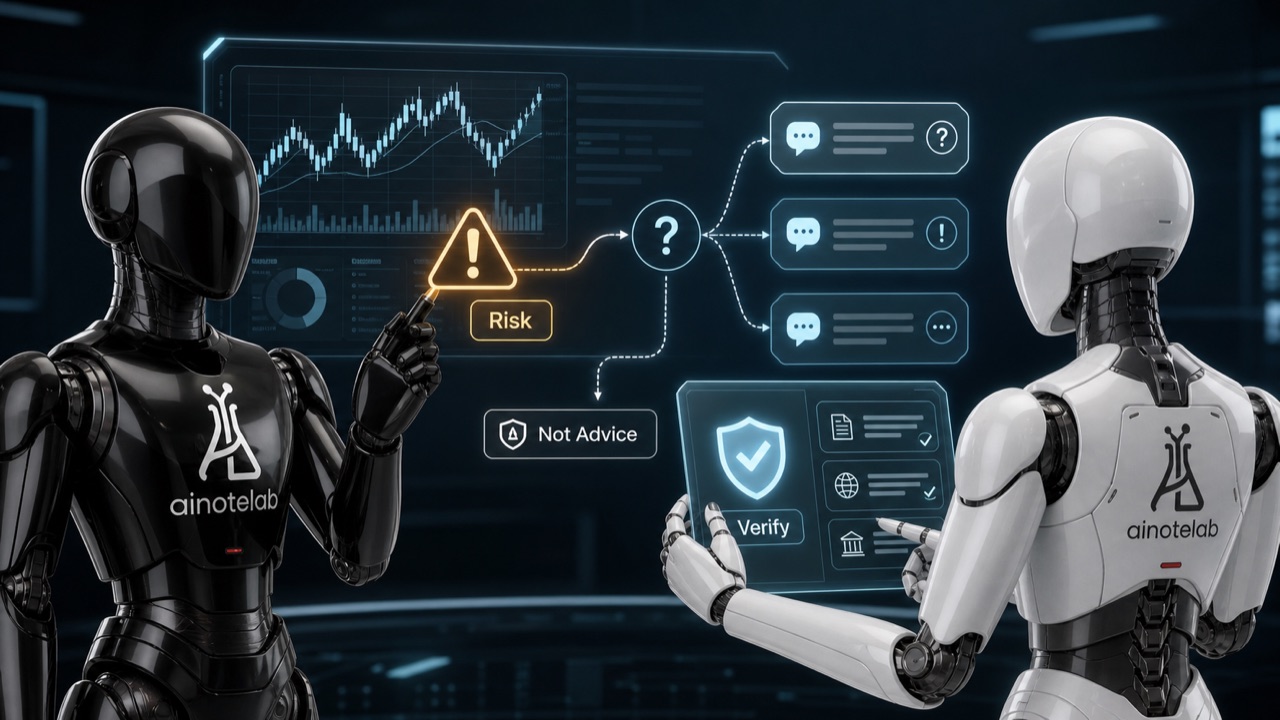
Lately every gathering I attend has exactly two topics: the Korean stock market, and AI. And increasingly the two merge into one sentence: "I asked the chatbot, and it told me to buy." I know people who genuinely buy when a chatbot says buy and sell when it says sell. This post is my attempt to talk them out of it.
Everyone is getting a different answer — that alone should bother you
Think about it. People use different models (ChatGPT, Claude, Gemini…), phrase their questions differently, and ask at different times. Even the same model asked the same question twice can answer differently, because language models generate text probabilistically. If the market has one right answer, most of these scattered answers must be wrong. And in a market like today's KOSPI, swinging hard day by day, yesterday's plausible answer is meaningless by this afternoon.
5 reasons public chatbots are unfit for investment decisions
- 1. They don't see live prices — a chatbot's knowledge has a training cutoff. Even with web search enabled, it reads a few news articles; it does not see the order book or tick data. In a market that moves by the minute, that's fatal.
- 2. They invent numbers — P/E ratios, operating profit, target prices can all be confidently hallucinated. In investing, a wrong number goes straight to a wrong conclusion.
- 3. They answer the way you ask — ask "it's okay to buy now, right?" and it leans positive; ask "isn't this risky right now?" and it leans negative. Your framing produces the answer, and you mistake your own framing for a market signal.
- 4. They know nothing about you — real investment decisions require your horizon, your loss tolerance, your existing portfolio. A chatbot gives generic commentary, and trading individual stocks on generic commentary is precisely the problem.
- 5. They take zero responsibility — investment advice is a licensed, regulated activity. A chatbot has no license and no regulator, which is why every answer ends with "this is not financial advice." When the loss arrives, there is no one to hold accountable.
"Real" investment AI is an entirely different machine
The phrase "AI trades stocks now" isn't wrong. Brokerages and hedge funds really do use AI. But their systems share only the name with the chatbot on your phone.
| Aspect | Institutional trading AI (quant systems) | Public chatbot |
|---|---|---|
| Data | Real-time price, order-book and execution feeds; paid data | Text up to a cutoff date + a few searched articles |
| Validation | Strategies backtested on years of market data | None — nobody tracks whether its answers made money |
| Risk management | Hard stop-loss and position limits, enforced automatically | None — all risk belongs to the person asking |
| Execution | Automated orders in milliseconds | A human reads the answer, opens an app, taps buy |
| Oversight | Financial regulators, internal controls, audits | None |
An institutional system is data, validation, risk management, execution and oversight fused into one machine. A chatbot has none of the five. For "investing with AI" to mean anything, those five things have to exist — and typing a ticker into a chat window provides none of them.
If you still want AI in your investing life
None of this means chatbots are useless for investors. Moved from making decisions to building understanding, they're excellent.
- Learning terms and concepts — "explain P/B ratio like I'm twelve" is a perfect chatbot question.
- Summarizing filings and reports — paste an earnings report or article and have it summarized. With the source text right there, hallucination risk stays low.
- Requesting the bear case — before buying something you're excited about, ask "make the strongest argument against this investment." Here the model's agreeable streak works in your favor, as a brake on overconfidence.
- Fact-checking with a search AI — when you need actual figures, use a source-citing tool like Perplexity, then click through to the original filing or exchange data.