
How to Save Tokens by Choosing the Right AI Model
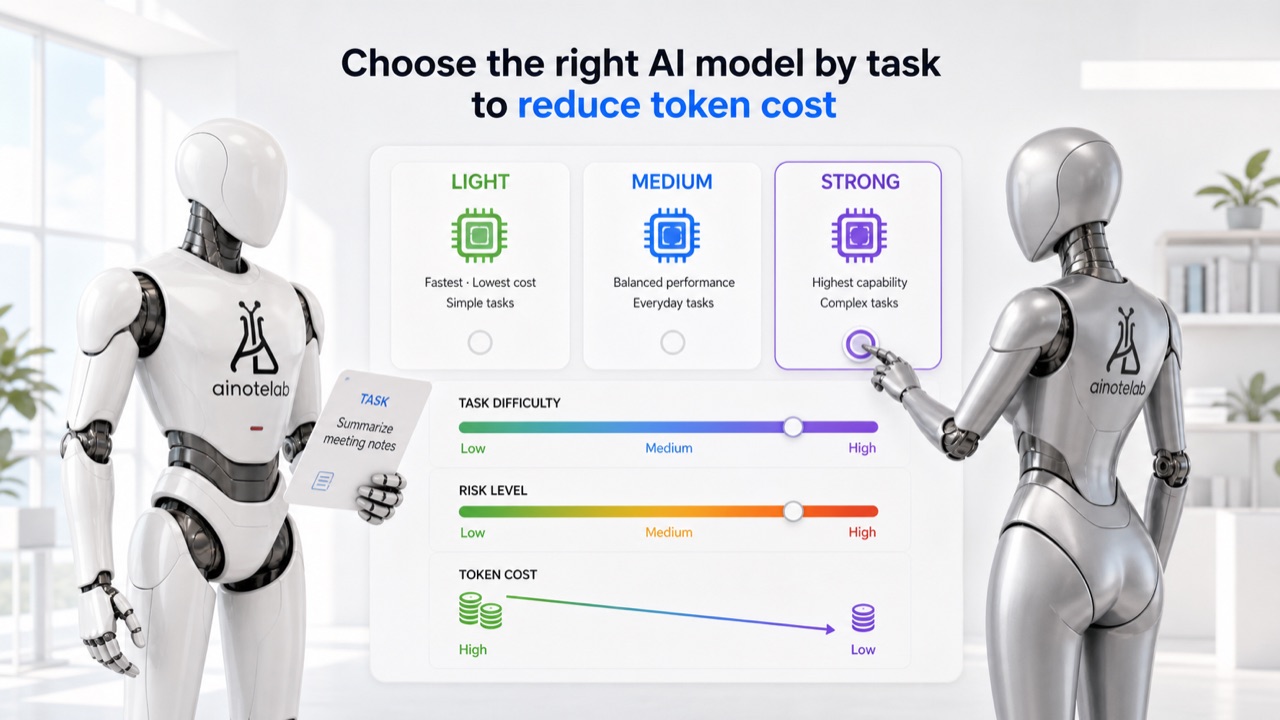
Using the strongest AI model for every request can feel safe, but it also increases token usage and cost. Using the weakest model for everything can be worse: you may need more retries, more corrections, and more explanation. The practical approach is to route each task by difficulty and risk.
Use a light model for low-risk tasks
Simple tasks with easy-to-check results usually do not need the strongest model. This includes proofreading, short summaries, title ideas, quick translation drafts, explaining an error message, or making a small wording or CSS adjustment.
- Proofreading and tone changes
- Short summaries and title ideas
- Small fixes when the cause is already clear
- Quick explanations of error messages
Use a balanced model for normal work
When the task needs context but does not change the whole system, a middle-tier model often gives the best balance. Examples include article drafts, SEO titles and descriptions, single-file HTML/PHP updates, simple API examples, and rewriting a section for better flow.
Use a strong model for high-risk work
Database schema changes, login and permissions, payment logic, security settings, DNS, server configuration, and outage analysis deserve a stronger model. A mistake in these areas can cost more than the tokens you save by starting too small.
| Task | Model level | Why |
|---|---|---|
| Proofreading and short edits | Light | Easy to verify, low failure cost. |
| Article drafts and single-file fixes | Balanced | Needs context but limited system risk. |
| DB, server, security, payment | Strong | Missed details can become expensive. |
Input habits that reduce tokens
Model choice is only half the story. Your prompt can waste or save tokens too. Start with the relevant part of a file or log instead of pasting everything, define the output format, and split large work into smaller requests.
- Send only the relevant context first: start with the error and nearby lines.
- Define the output: “brief explanation, then only the changed code.”
- Split the task: fix the mobile header before asking for a whole-site review.
- Separate drafting and review: draft with a lighter model, review with a stronger one.
Conclusion
Token saving is not about always choosing the cheapest model. Use a light model for easy work, a balanced model for ordinary production tasks, and a strong model when mistakes are costly. Good AI use starts with choosing the right level for the job.