One Month with ChatGPT — Is Free Enough, or Is Paid the Answer?
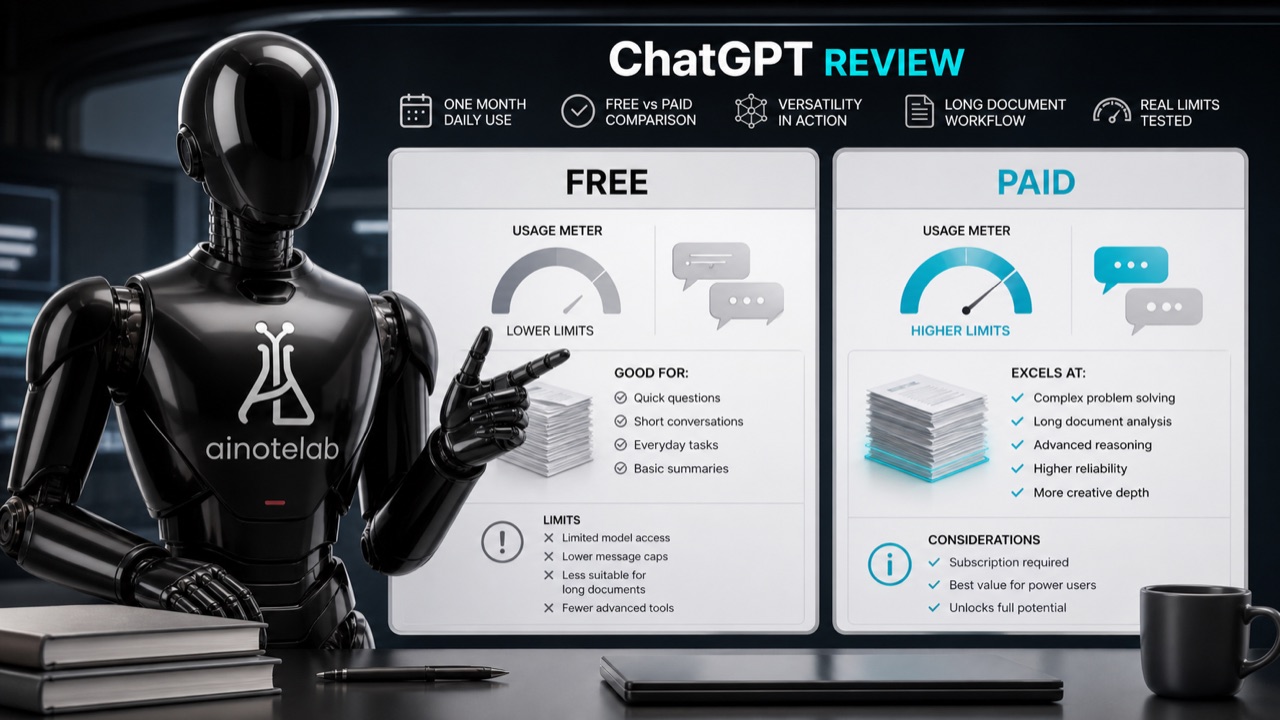
I figured I should start with the most famous AI and really put it through its paces, so I used ChatGPT every day for a month, at work and in daily life. I spent the first two weeks on the free version and the last two on the paid plan (Plus), and this review focuses on the difference between them.
What I actually used it for every day
- Drafting and polishing work emails (almost daily)
- Turning rough meeting notes into clean minutes
- Learning unfamiliar concepts (especially with "explain it like I'm in elementary school")
- Excel formula questions, simple Python scripts
- Outlining blog posts, brainstorming title options
- Generating images (illustrations for presentations)
What I liked
1. The "just ask it" versatility
Its biggest strength is how general-purpose it is. Translation, summarization, coding, images, even idle chat — it all happens in one window. Whenever I got stuck on something, "let me just ask ChatGPT" became my natural first reaction. It genuinely builds a habit.
2. It remembers the conversation well
Thanks to the memory feature that retains past conversations, the answers get more tailored to my situation the more I use it. Being able to say "about that project I mentioned last time" and have it actually understand was genuinely convenient.
3. Built-in search keeps it current
With web search turned on, it answers questions about breaking news or current prices with source links included. The old "I only know things up to 2023" limitation has, in practice, all but disappeared.
What disappointed me
1. Usage limits on the free version
The free tier does give you the latest model, but on heavy days you hit the cap quickly and get switched to a lower-performing model. If you only use it lightly two or three times a day, free is plenty — but once you lean on it seriously for work, the limit gets annoying.
2. Hallucinations are still a thing
Several times over the month, when I asked about statistics or legal provisions, it confidently served up plausible-sounding wrong answers. Turning on search mode reduces this a lot, but for numbers, dates, and quotations, you need the habit of actually clicking through to the source to verify.
3. Limits with long documents
When I fed it entire reports dozens of pages long, I got the feeling it was glossing over the later sections. For long-document work, Claude — which I'll cover in the next post — was better.
Free vs. paid — so who should actually pay?
| If this is you | Recommendation |
|---|---|
| You occasionally ask it things instead of searching | Free is plenty |
| Office worker or freelancer using it daily for work | Go paid — not worrying about limits is the biggest win |
| You generate images frequently | Go paid — the free generation caps are tight |
| Your main use is one specific area (coding, long documents) | Compare against competitors like Claude before you pay |
Verdict
ChatGPT remains "the safest choice for anyone just getting started with AI." Its strength isn't excelling at one particular thing — it's solid performance across the board combined with convenience features (memory, search, images, voice). If I had to give star ratings: Versatility ★★★★★, Long documents ★★★☆☆, Value for money (free tier) ★★★★☆. In the next post, I'll give Claude — reportedly strong at writing and document work — the same treatment.